The Book of Mormon: Look to God and Live

ChristusThe Book of Mormon: Chapter Thirty-Six: Helaman 8:15

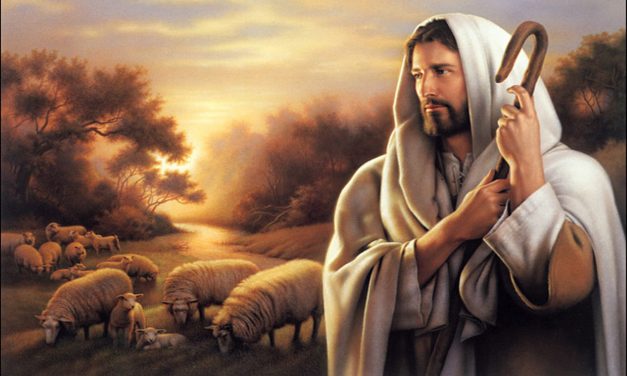
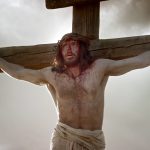
15And as many as should look upon that serpent should live, even so as many as should look upon the Son of God with faith, having a contrite spirit, might live, even unto that life which is eternal.

The call to “look to God and live” is ours today as it been to those who lived anciently on this continent as recorded in The Book of Mormon, above. The same call, to “come and see” or come to Christ is written all over the New Testament. The invitation is open, extended, as Christ’s arms, without a closed-ended RSVP. In the words of one LDS (Latter-day Saint, “Mormon,”) apostle:

The burden of all the prophets, from Adam to our present prophet, has been to persuade men to look to God and live.  Continue reading

Posted in About Mormons, Basic Beliefs, Book of Mormon Reading, Lessons From the Book of Mormon, The Bible and the Book of Mormon | Tagged , , , , , , , , , , , | Leave a comment

Book of Mormon Prophet Abinadi

The story of Abinadi is found in the Book of Mormon, the Book of Mosiah.  Abinadi was a Nephite prophet who lived around 150 B.C.  The Nephites were those people who kept historical and spiritual records that have been recently revealed.   Nephi was the son of Lehi, a Jerusalem prophet around 600 B.C. who was led out by God just prior to the Babylonian Captivity.  Lehi, his family, and a few other families were led to the Americas and especially blessed by God as a branch of Israel.  Nephi was righteous and became a prophet and leader, while two of his brothers, Laman and Lemuel, rebelled and dissented, and as “Lamanites,” constantly warred against the Nephites, although at time they were righteous.

abinadi book of mormonAt one point in Nephite history, they had to leave the area they called “Nephi” and flee into the wilderness to escape the Lamanites.  Later, a man named Zeniff decided to take a party of men and try to find and reclaim the land of Nephi.  Once arriving, they were cajoled by the Lamanites only to be placed in bondage to them.  Eventually triumphing, Zeniff handed the kingdom over to one of his sons, Noah, who was a wicked king with false priests.  Abinadi was sent from God to preach repentance to them.

Abinadi prophesied that if the people of Noah did not repent, they would be taken into bondage.  He was arrested and brought before King Noah and his priests.  King Noah said, when he heard Abinadi’s accusations:

Who is Abinadi, that I and my people should be judged of him, or who is the Lord, that shall bring upon my people such great affliction (Mosiah 11:27)?

Abinadi began to preach to King Noah and the wicked priests, reciting biblical and Nephite history up to that time, reminding them of the Ten Commandments and Law of Moses, which they were supposed to keep, while looking forward to the coming of Christ, of whom the Nephite prophets testified by name.

I say unto you that it is expedient that ye should keep the Law of Moses as yet; but I say unto you, that the time shall come when it shall be no more expedient to keep the law of Moses.  And moreover, I say unto you, that salvation doth not come by the law alone; and were it not for the atonement, which God himself shall make for the sins and iniquities of his people, that they must unavoidably perish, notwithstanding the law of Moses….

For behold, did not Moses prophesy unto them concerning the coming of the Messiah, and that God should redeem his people? Yea, and even all the prophets who have prophesied ever since the world began–have they not spoken more or less concerning these things (Mosiah 13)?

Abinadi went on to prophesy more about the life and mission of the coming Savior, and about the atonement and resurrection and the nature of salvation.  Noah and his wicked priests had Abinadi burned at the stake, but they were unable to lay a hand on him until Abinadi had finished imparting his message, thereby fulfilling that which God had called him to do.

That might have been the end of the story had not Noah and his priests eventually met the same fate as Abinadi, which thing Abinadi prophesied, but also the story continues through Alma, one of the wicked priests who was deeply affected and converted through Abinadi’a teachings.  Alma sought the Lord, and the Lord called him to minister unto those who would hear the true gospel.  Alma received the priesthood power to baptize and to prophecy.  Even as he was hunted by King Noah, converts gathered to him, and they were eventually delivered out of the kingdom to safety among other Nephite groups.  Alma became the great high priest, so deep were his convictions.

Abinadi, then, was a martyr for the gospel’s sake and one of the great characters of the Book of Mormon.  You can read the Book of Mormon account here.

Additional Resources:

Basic Mormon Beliefs and Real Mormons

Book of Mormon Research

The Bible in Mormonism

Posted in Who's Who in the Book of Mormon | Tagged , , , , , , , , , , | Leave a comment

The Book of Mormon: Comparing a Chapter with The Bible

When I was a missionary for The Church of Jesus Christ of Latter-day Saints (inadvertently called the “Mormon Church” by the media), my mission president reviewed 1 Nephi Chapter 17 with me and it gave me a lot of hope. Although I don’t believe I’ll ever need to build a ship to reach somewhere important, I believe the truths taught within this chapter still apply to me in my life. As I’ve spent the past couple of years applying things I’ve learned from this chapter in The Book of Mormon (scripture written by ancient prophets in the Americas), I’ve grown closer to God and seen His hand guiding me in my life to where He wants me to be and to become the potential He sees in me.

The Book of MormonThis article is by no means an exhaustive description of the chapter but briefly touches upon the importance of the teachings taught within The Book of Mormon and a comparison with The Bible. Chapter 17 in 1 Nephi contains a story of faith where the prophet Nephi is commanded by the Lord to build a ship. His brothers don’t believe it’s possible but Nephi follows the Lord’s instructions and builds the ship so that his family can cross the ocean to reach the Promised Land.

As you read this chapter, I invite you to look at the footnotes and other available resources which help one study the scriptures. A modern apostle of Christ, Elder D. Todd Christofferson stated “We should therefore study with these questions in mind: “Why was this included? How does this apply today and to me?” (“How to Study the Book of Mormon,” Liahona, October 2011 ) Continue reading

Posted in Book of Mormon Reading, Book of Mormon Reflection, Lessons From the Book of Mormon, The Bible and the Book of Mormon | Tagged , , , , , | Leave a comment

Raising a Son, with Help from the Book of Mormon

Father and Mother of a Stripling Warrior

Written by Ashley Bell, a member of The Church of Jesus Christ of Latter-day Saints (“Mormon”), graduate of BYU in Recreation Management, wife and expectant mother residing in Taylorsville, Utah.

Mormon MomTyler and I are 22 and 23 years old, and we found out this past month that we will be the parents of a future stripling warrior this coming June! Those ultrasound pictures are now treasures for us. On the last still image he was even giving a total thumbs up, as if to say “I’m excited to come, and we’re going to have fun!”

So what is a young couple like us supposed to do with the realization that we are actually going to be parents? We are so excited for it, and it seems like all fun and games, but in reality, the responsibility to parent is great. Luckily, both Tyler and I have had great examples of goodly parents and so we can learn from their good doings; but at the same time our son’s grandparents aren’t going to be raising him… we are!
We Are Never Alone

The beautiful thing about parentage is that we don’t have to do it alone. God gave men and women specific attributes to help in the raising process. Not every family gets the chance to have a mother and father in the home, but in these situations I really do believe that the Lord makes up the rest if the parent rearing the child asks in faith with a believing heart.

Since we don’t have to do it alone, how can we do it together? Well, Tyler and I found comfort from the scriptures by the example of the parents to the young Stripling Warriors; whose story can be found in the Book of Mormon.Their dad’s had repented of their old ways and had covenanted that they would not take up arms again to fight; so what happened was that when a war broke out, they sent their sons to go in the stead!  Their father’s ability keep their covenants shows they put God first and that they diligently presided in their homes. They were fulfilling their role as a good husband and father by keeping their covenants. Now is this all that they did? No. In Alma 56:27 we read that while their sons were off to fight for the liberty of their families, “there was brought unto [them] many provisions from [their] fathers!” This sounds an awful lot like providing and protecting if you ask me. If you are familiar with this story then you know that these young sons also “did not fear death” and they attributed this faith to their mothers by saying, “we do not doubt our mothers knew it” (see Alma 56:47-48). It is obvious here that their mothers were faith-filled women who knew how to nurture, something that these young sons desperately needed throughout their lives in order for them to stand ready when the call arose.

Now what stood out to me here was the fact that the mothers and fathers played different roles in this situation—and yet both were vital! The fathers did presideprovide and protect. And the mothers did indeed nurture. These roles can also be found in The Family: A Proclamation to the World, which was given to us by modern day prophets. Yet again Tyler and I were comforted by the Holy Ghost that even though we are young and inexperienced we can still raise a valiant stripling warrior of the latter days if we but hearken to the scriptures and to the voice of modern day prophets.

Just last night Tyler shared with me a quote from a modern day prophet, Elder Robert D. Hales, that can be applied to parents everywhere throughout the world. The words hold power, “Parents are never failures when they do their best to love, teach, pray, and care for their children” (CR, April 2004). I know we will make mistakes, but the bottom line is, if we do our best to fill our divine roles as parents, we cannot fail.

Additional References: 

Learn more about divine parental roles in The Family: A Proclamation to the World

How the Book of Mormon can help answer life’s questions

Request a free Book of Mormon

Posted in Lessons From the Book of Mormon | Tagged , , , , , , , , , | Leave a comment

The Tree of Life

by Nora

In downtown Fresno, California, there is a large building that houses a remarkable room in a corner of the ground floor. If you walk up to the windows and look inside, you will see an amazing sight: row upon row of tiny babies, some no bigger than the palm of your hand, presided over by the best doctors and under the constant watch of nurses and parents dressed in surgical gowns and masks. Some of the babies’ faces are nearly covered by the blue tubes of ventilators; others rest more quietly under clear oxygen hoods. Some lie under bright lights, their vision completely obscured by black eye-masks. All are fighting for their lives as those who care for them hover like angels, touching, tending, watching, and praying.

Seeking the Tree of Life

Joseph Smith, the first prophet of The Church of Jesus Christ of Latter-day Saints (which church is sometimes nicknamed “The Mormon Church”), translated The Book of Mormon: Another Testament of Jesus Christ from an ancient record by the gift and power of God. The Book of Mormon is the religious history of a people who left Jerusalem in about 600 BC and were led by God to travel to the Americas, where they built a civilization that flourished for 1000 years. Early in their travels, while they were still only a few days’ journey from Jerusalem, their first prophet, Lehi, had a remarkable dream. He found himself wandering in a “dark and dreary waste” for many hours. After calling upon God for help, he saw a spacious field, with a path traversing it, which led to “a tree, whose fruit was desirable to make one happy.” By following the path, holding fast to the “rod of iron” which ran along it, Lehi and many of his family were able to make their way along the path, avoiding the river of filthy water that ran alongside, despite “mists of darkness” that arose to obscure their sight. When they reached the tree, Lehi says, they tasted the fruit, which was ”most sweet, above all that I ever before tasted. Yea, and I beheld that the fruit thereof was white, to exceed all the whiteness that I had ever seen. And as I partook of the fruit thereof it filled my soul with exceedingly great joy” (The Book of Mormon, 1 Nephi 8:11–12).

The Tree of Life and the Love of Christ

Throughout the rest of the Book of Mormon, the tree Lehi saw is referred to as “The Tree of Life.” It becomes a central image in the religious teachings of his people and its fruit is referred to hundreds of years later as being “most precious, . . . sweet above all that is sweet, . . . white above all that is white, yea, and pure above all that is pure; and ye shall feast upon this fruit even until ye are filled, that ye hunger not, neither shall ye thirst” (The Book of Mormon, Alma 32:42). Shortly after Lehi’s dream, the fruit of the Tree of Life is explained to be symbolic of

the love of God, which sheddeth itself abroad in the hearts of the children of men; wherefore, it is the most desirable above all things. . . and the most joyous to the soul (The Book of Mormon1 Nephi 11:22–23).

The Tree of Life and Jesus Christ

The Tree of Life symbolizes eternal life with God and with His Son, Jesus Christ. Its fruit is the love of God, by which He sent His Son Jesus Christ to atone for us so we could return to Him. Jesus is the source of all love and all life. He created this living world; He redeemed it through His sacrifice; He has brought about the resurrection of all mankind; and through faith on His name and repentance of our sins, we can return to live eternally with God.  Our souls can be filled with the love of Christ, which is most precious, sweet above all that is sweet, pure above all that is pure, the most desirable of all things, and the most joyous to the soul.

Like the tiny infants in the NICU at Valley Children’s Hospital, we are fighting for our eternal lives. We are constantly watched over and nurtured by earthly and heavenly angels, who rescue, teach, touch, and love us through every step along the path. Sometimes trials obscure our vision, like masks, like the mists of darkness; but always, our Savior, Jesus Christ, is watching over us to help us along. We may not be able to see the Tree of Life, but it is there, waiting for us. Its fruit is worth every struggle.

Additional Resources:

Amazing Grace: The Atonement of Jesus Christ

The Tree of Life in Ancient Cultures

About God: He is Loving

Posted in Book of Mormon Reflection | Tagged , , , , , , , , , , , , | Leave a comment

The Book of Mormon: Our Journey and Hope

Written by Timothy Berman, member of The Church of Jesus Christ of Latter-day Saints (inadvertently referred to by the media as “The Mormon Church”). Timothy is a columnist for the Marysville LDS Church Examiner, Marysville Parenting Examiner, and the Seattle Multi-Faith examiner. He also maintains a blog at www.mormonapologeticstudies.org.

Mormon writer: Book of MormonAdmonishing Timothy, the apostle Paul wrote: 

All scripture is given by inspiration of God, and is profitable for doctrine, for reproof, for correction, for instruction in righteousness: That the man of God may be perfect, thoroughly furnished unto all good works (2 Timothy 3:16-17).

Of course, in the historical context, the Apostle was referring to the Old Testament that Timothy had access, however, we have additional scriptures that help guide us as we meditate [upon them] day and night (Psalm 1:2). Thus, in the broader sense, we also come to understand and know that our Heavenly Father has provided additional revelation through these sacred records that provide each one of us an understanding of how we ought to live our lives and base our faith and testimony. Because of this, we have an opportunity in this coming year to read, study, ponder and meditate on the Book of Mormon. Whether one has devoted daily reading and studying, or this is the first time one has read the Book of Mormon, as members of the Church of Jesus Christ of Latter-day Saints, we have an opportunity of strengthening our testimony.

Book of MormonPresident Ezra Taft Benson (a late prophet from the Church of Jesus Christ of Latter-day Saints, inadvertently called the “Mormon Church” by friends of other faiths) published a book in 1998 titled A Witness and a Warning: A Modern-day Prophet Testifies of the Book of Mormon. Benson, Mormon prophet, writes:

The Book of Mormon (Another Testament of Jesus Christ in addition to The Bible) brings men to Christ through two basic means. First, it tells in plain manner of Christ and His gospel. It testifies of His divinity and of the necessity for a Redeemer and the need of our putting trust in Him. It bears witness of the Fall and the Atonement and the first principles of the gospel, including our need of a broken heart and a contrite spirit and a spiritual rebirth. It proclaims we must endure to the end in righteousness and live the moral life of a Saint.

Reflecting upon this, a personal perusal of the Book of Mormon led to Mosiah 3:5-8where King Benjamin, a prophet in ancient America, is continuing his address to the multitude of people that had gathered to hear him speak. Prophetically, King Benjamin proclaims the coming of the Messiah, his mission and ministry, and the ultimate sacrifice the Messiah would make. This substantiates all of the ancient prophecies of the coming of a Messiah that we read throughout the Old Testament, and the fulfillment of those prophecies as we read and study in the New Testament.

Continue reading

Posted in Jesus Christ, Lessons From the Book of Mormon | Tagged , , , , , , , , | Leave a comment

How to Know the Book of Mormon Is True: A Metaphor

Members of The Church of Jesus Christ of Latter-day Saints (inadvertently called by friends of other faiths, the “Mormon Church“) study out of a book of scripture called the Book of Mormon. The Book of Mormon is a volume of holy scripture which gives an account of God’s dealings with the ancient inhabitants of the American continent. It was translated by the power of God through a modern prophet of God. It is as the title says, Another Testament of Jesus Christ. Ancient prophets, whom God chose and called, taught the people in the Americas about Jesus Christ and prophesied of His coming.

Book of MormonIn this particular metaphor Alma, a Book of Mormon prophet, talks to a group of people who have been humbled after being cast out of their churches by prideful people. They come to Alma wanting to know what to do as a result of being kicked out of their synagogues. Alma tells them that they should study the word of God and live by it’s teachings. He gives a discourse on faith, and compares the word of God to a seed that can swell in our hearts as we plant it and nourish it. In this article written by Tom G. Rose, a Latter-day Saint (“Mormon“), he talks about how we plant the word of God in our hearts. Continue reading

Posted in Lessons From the Book of Mormon | Tagged , , , , , , , , , | Leave a comment

Do Mormons Believe in the Bible?

Some people not familiar with members of The Church of Jesus Christ of Latter-day Saints (“Mormons“) think that they don’t believe in the Bible. D. Lauritsen, a Mormon professor, answers this question in the article below to help clear up this misconception. One reason people have this misconception is because we use additional scriptures such as the Book of Mormon: Another Testament of Jesus Christ, which is a record of God’s dealings with the ancient inhabitants of the American continent. But in fact, quite the opposite is true. Latter-day Saints cherish the Bible and follow its teachings. Members use the Book of Mormon as a companion to help support the Bible, not to replace it. I’ve received much comfort and direction myself from passages in the Bible. Continue reading

Posted in Basic Beliefs, The Bible and the Book of Mormon | Tagged , , , , , , , , | Leave a comment

Did I Live Before This Life?

Many people wonder if there is a purpose to life. How can I find more meaning to my life? As a member of The Church of Jesus Christ of Latter-day Saints (inadvertently called by friends of other faiths, the “Mormon Church”), I testify that life does have a purpose. We had a life before life here on earth. We are all literally spirit children of God the Father; the creator of the universe. We lived with Him before this life as His children. He taught us about the Plan of Salvation while we lived with Him and He loves and cares about us.

life before lifeThe Book of Mormon, a record of holy scripture that gives an account of God’s dealings with the ancient inhabitants of the American continent, has helped me come to know that we lived with God before we were born. It teaches of all these truths, which have brought purpose and meaning to my life. The teachings of the Book of Mormon are the teachings of Jesus Christ. I know the Book of Mormon is the word of God because of the Holy Spirit that has testified to me that they are the words of Jesus Christ.

A Book of Mormon prophet named Alma references clearly the Savior’s doctrine of a pre-mortal life where we lived as intelligent spirits and grew in the presence of God, before coming to mortality to further progress. Alma  explains the opportunities presented to the spirit children of God in the premortal existence in these words: Continue reading

Posted in Book of Mormon: Answers for Life | Tagged , , , , , , , , , , , , , , , , , , , | Leave a comment

Do Mormons Have Scriptures Besides the Book of Mormon?

The Church of Jesus Christ of Latter-day Saints (inadvertently called by friends of other faiths, the “Mormon Church”) believes in an open cannon of scripture, and that God continues to speak to His children today. God has revealed His word to prophets since the days of Adam, and that continues today. The Church accepts several books of canonized scripture, as well as continuing revelation from living prophets and apostles. This article was written by Mormon professor D. Lauritsen to better inform those who have questions about Mormon scriptures:

Do Mormons Have Scriptures Besides the Book of Mormon?

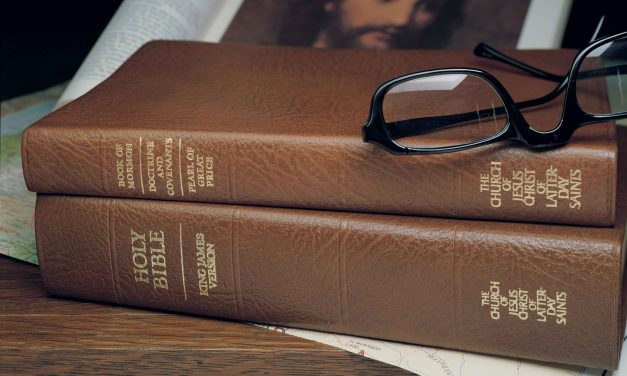
Brief Answer: yes, three other volumes: the Bible, the Doctrine and Covenants, and the Pearl of Great Price.

Detailed Answer:

Doctrine and Covenants

Book of MormonSeveral years after the translation and publication of the Book of Mormon in 1830, the Lord commanded Joseph Smith to compile and publish many of the revelations that Joseph had thus far received from the Lord, revelations that Joseph himself had written down or had dictated. In 1835 these revelations were published as the Book of Doctrine and Covenants of The Church of the Latter-day Saints (inadvertently called by friends of other faiths, the “Mormon Church”). Each revelation, referred to as a section, is prefaced with a brief description of the date, place, and circumstance in which the revelation was received, as well as the revelation’s general contents. often within a single section are numerous revelatory concepts (for example, sections 76 and 84). other sections are replete with instructions and procedures (Sections 102 and 136). Some sections brim with prophecy (sections 45 and 89), while others are brief answers to specific doctrinal questions (section 77). Several are highly personal (sections 25 and 121). Most of the revelations appear in the order they were received. Continue reading

Posted in Modern Revelation, The Bible and the Book of Mormon | Tagged , , , , , | Leave a comment

How Can A Belief In Jesus Christ Help Me?

By Eric Kotter, a member of The Church of Jesus Christ of Latter-day Saints (“Mormon“). Eric is a student at BYU-Idaho studying communications.

The Book of Mormon is an ancient record of holy scripture that gives an account of God’s dealings with the ancient inhabitants of the American continent. In Alma chapter 36 of the Book of Mormon, Alma, an ancient prophet, talks to his son about his conversion to the gospel of Jesus Christ. When Alma was younger, he was not a part of the Church of Jesus Christ in the land. In fact, he actively went about “seeking to destroy the church of God” and he led many people astray from the gospel. One day while he was out with some of the king’s sons, who were also disturbers of the church of God, an angel appeared to them. The angel told Alma and the king’s sons to stop persecuting the church. The angel said to Alma, “If thou wilt of thyself be destroyed, seek no more to destroy the church of God” (Alma 36:9).

studying about Jesus ChristWhen the angel said this to him, he fell to the earth unconscious and unable to move for three days. This is what Alma said happened to him after he was struck down:

Yea, I did remember all my sins and iniquities, for which I was tormented with the pains of hell; yea, I saw that I had rebelled against my God, and that I had not kept his holy commandments.

We might not necessarily go through a situation as extreme as Alma’s experience was, but we all have our own weaknesses, sins, or challenges to work through in our lives that require the help of the Savior. This next part tells us how Alma was freed from these awful pains, and it teaches us how we can all receive help through Jesus Christ. Continue reading

Posted in Book of Mormon: Answers for Life, Uncategorized | Tagged , , , , , , , , , , , , | Leave a comment